


Deventer antique 355 x 615 cm
A rare 1920 Deventer rug — hand-knotted Dutch heritage
A large hand-knotted Deventer rug in excellent condition, manufactured around 1920. This rare specimen, measuring 355 x 615 cm, dates from the golden age of the Dutch carpet industry and is an authentic piece of Dutch artisanal heritage — not a reproduction, but an original from the same period when designers like Theodoor Colenbrander and Jaap Gidding brought Dutch carpet art to global fame.
What is a Deventer rug?
The Deventer rug is a hand-knotted carpet that has been manufactured in the Netherlands since 1816, originally in the Koninklijke Deventer Tapijtfabriek (Royal Deventer Carpet Factory). Production began as Smyrna carpet — named after the Turkish port city of Smyrna (modern-day Izmir), which at the time was the international transshipment point for Oriental and Persian rugs. When the Netherlands decided in the 19th century to start manufacturing its own hand-knotted carpets — driven by a combination of employment motives and the need for domestic prestige — Deventer became the hub of this industry.
Although carpet factories were also active in Doornik, Baarn, Kralingen, and Hilversum, the designation "Deventer rug" became the general term for any hand-knotted carpet made in the Netherlands from the beginning of the 20th century — a designation that was also internationally recognized and remains valid to this day.
The golden years around 1920 — Amsterdam School and Art Deco
The years around 1920 represent the creative pinnacle of the Dutch carpet industry. While early Deventer rugs were still guided by oriental motifs and neoclassical Empire style, Dutch designers took control of the designs from the late 19th century onwards:
- Theodoor Christiaan Adriaan Colenbrander (1841–1930) — one of the most influential Dutch designers, known for his expressive, colourful designs that abandoned oriental tradition in favour of a unique Dutch style.
- Jaap Gidding (1887–1955) — master of Art Deco, whose rugs with geometric Art Deco patterns within plain borders are considered icons of the interwar period.
- Amsterdam School — the architects and designers of this movement transformed the Dutch interior into a Gesamtkunstwerk, and the Deventer rug designs fit perfectly within this aesthetic.
This particular 1920 specimen falls right in the middle of this period — it is a historical document of Dutch interior culture during the interwar years.
Characteristics of an authentic Deventer rug
A genuine Deventer rug distinguishes itself technically very clearly from Persian, Turkish, or other Oriental rugs:
- Hand-knotted with thick wool on a wool warp and wool weft — 100% wool, no synthetic fibres.
- 2 to 4 knots per cm² — for comparison: a Persian rug has 20 to 100 knots per cm². The Deventer knot is thus significantly coarser, resulting in a robust, "sturdy" rug with a thicker pile.
- Design drawn in advance on a pattern drawing. Customers at the factory were shown a so-called "presentation drawing" of a quarter of the rug, mirrored in two mirrors to suggest the whole — after which the rug was knotted to size.
- "Room-sized" rugs were a specialty — large carpets made to order, often for specific spaces in mansions and country estates.
- The patterns are often geometric, Art Deco, or Amsterdam School-inspired — a Dutch design language developed nowhere else in the world in such a way.
How does a Deventer rug differ from a Persian or Turkish rug?
The comparison is insightful — both traditions are hand-knotted and made of wool, but they differ fundamentally:
- Knot density: Deventer 2–4 knots/cm² · Persian 20–100 knots/cm² · Turkish 5–40 knots/cm². A Deventer therefore feels thicker and more "chunky" than a finely knotted Persian rug.
- Design language: Deventer = Dutch 19th/20th-century design language (often with Western influences) · Persian = age-old regional traditions (Nain, Tabriz, Heriz, Kashan) · Turkish = tribe and region-specific geometry.
- Production period: Deventer rugs are almost exclusively from the period 1816–1960. What you buy today is therefore by definition antique or vintage — no new ones are being knotted in the Netherlands anymore.
- Rarity: Unlike Persian rugs — of which new pieces are woven every month — Deventer rugs are a finite supply. What still exists is all there will ever be.
About this specimen — 355 x 615 cm, 1920, excellent condition
At 355 x 615 cm, this rug is one of the larger Deventer rugs — a truly "room-sized" format, originally presumably made for a grand reception room or library in a mansion. For a hand-knotted rug over 100 years old, it is in excellent overall condition: the wool is intact, the colours are still vibrant, and the pattern is legible across the entire surface.
At Galerie Hamming van Seventer, we have specialized in gallery-quality hand-knotted rugs since 1994. A Deventer rug of this size, from this period, in this condition is a museum-worthy piece — suitable for collectors, for those seeking a rug for a stately space, or for anyone who desires a true piece of Dutch cultural heritage in their home.
Viewing and purchasing
You don't buy a rug of this calibre sight unseen. We offer two ways to view this Deventer rug at your leisure and with expert advice:
- In our gallery — visit one of our three locations. For Deventer visitors, our Hilversum location is the most practical, approximately an hour's drive away. Make an appointment in advance, and we will ensure the rug is ready for you and you have ample time.
- Free home viewing service — we will visit you at your home in Deventer and the surrounding area (Apeldoorn, Zwolle, Arnhem, Twente). You will see the rug in your own interior, in your own light, with your own furniture — for a purchase of this level, it's the only proper way. No obligation, no cost.
For questions or to schedule a viewing, call 035-6228345 (Hilversum) or email info@kelim.nl.
Frequently Asked Questions about Deventer Rugs
What is a Deventer rug worth?
The value of a Deventer rug depends on age, design, condition, size, and potential designer. Pieces from the period 1900–1930 (especially designs by Colenbrander and Gidding) are most sought after and can range between €5,000 and €25,000+. This 1920 specimen, measuring 355 x 615 cm, is priced at €14,500.
How do I recognize a genuine Deventer rug?
By the knot density (2–4 knots/cm² is characteristic), the thick wool pile, the Dutch design language (geometric, Art Deco, or Amsterdam School-inspired), and the back — the wool warp and weft are both made of wool, not cotton as in many oriental rugs. An experienced rug gallery can confidently identify a Deventer rug as such.
Are Deventer rugs still being made?
No. The Koninklijke Deventer Tapijtfabriek ceased production of hand-knotted carpets in the early second half of the 20th century. What is still on the market is therefore by definition antique or vintage — a finite supply that only becomes rarer.
How do I maintain an antique Deventer rug?
A 100-year-old rug tolerates daily use well, provided it's handled carefully: regular vacuuming (without a beater bar), avoid placing it on a damp surface, and have it professionally cleaned every few years. Our cleaning and restoration specialists are experts in antique hand-knotted rugs and know the correct techniques for pieces from this period.
Other antique and special pieces
Our entire collection of antique and vintage hand-knotted rugs can be found in:
- Antique rugs — our collection of pre-1950 pieces
- Vintage & recoloured rugs — repurposed older rugs with a contemporary twist
- Persian rugs — for those seeking finer knot density and oriental tradition
Hamming van Seventer since 1994
Want to see how this product looks in your space?
Choosing the perfect rug has never been easier! See it in your own space before you make a decision.
Visit one of our 3 galleries. Amstelveen, Hilversum, Groningen
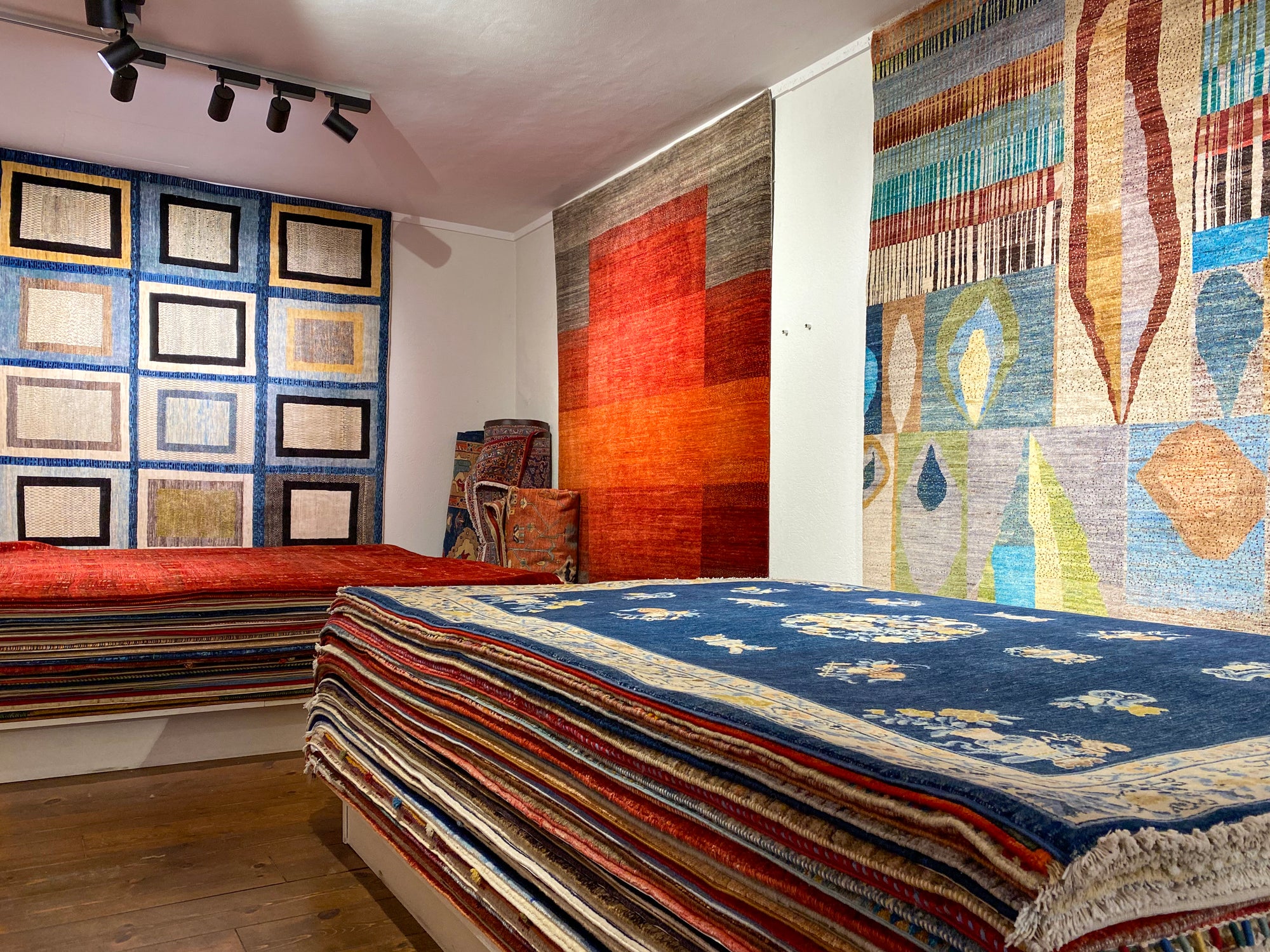
Dorpsstraat 33
1182 JA Amstelveen
Tue - Fri, 11:00 - 18:00
Sat 10:00-17:00, Sun 13:00-17:00
tel. 020-6405177
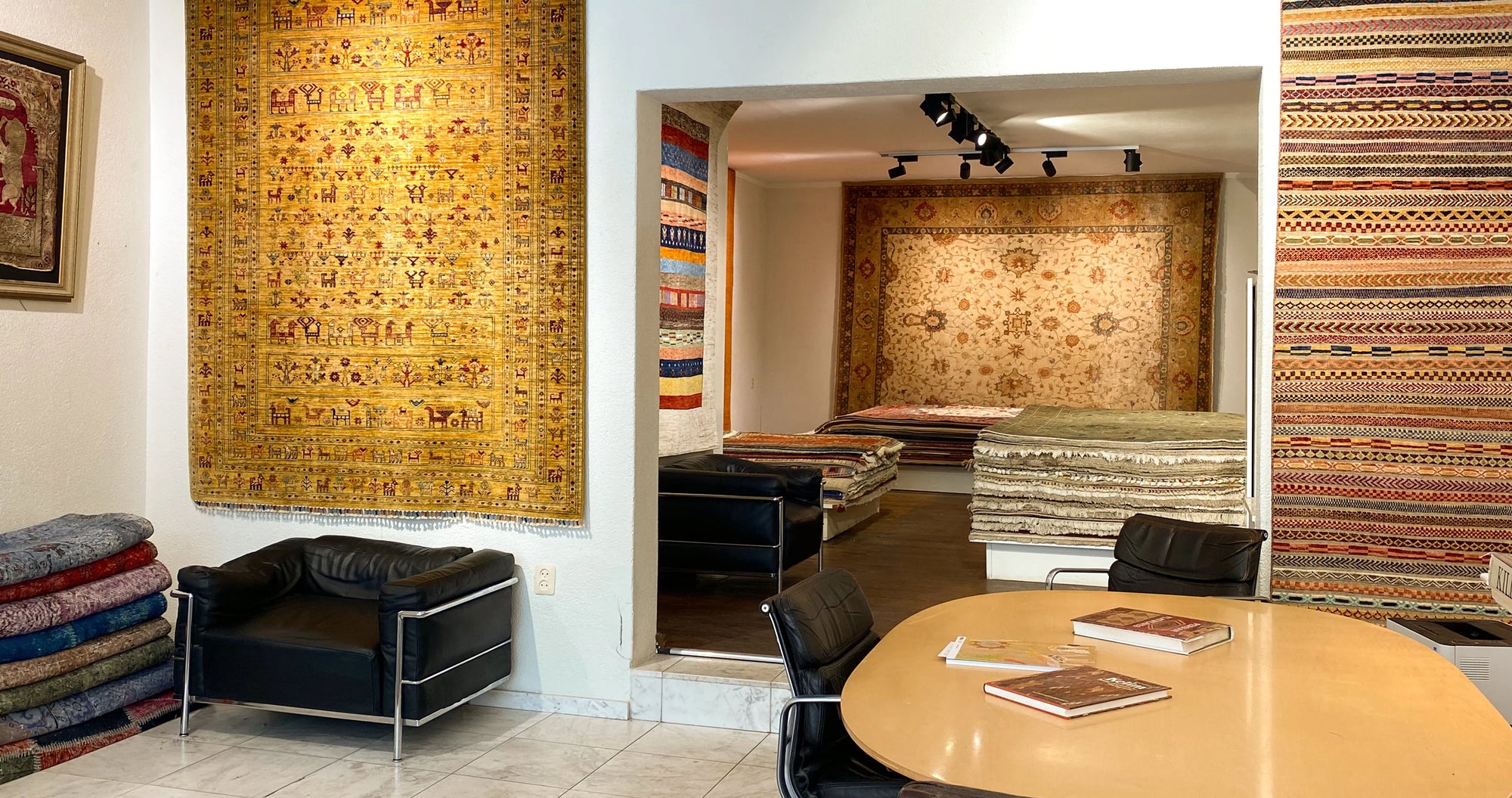
Gedempte Zuiderdiep 71
9711 HC Groningen
Tue - Fri, 11:00 AM - 6:00 PM
Sat 10:00 AM - 5:00 PM
tel. 050-3186797
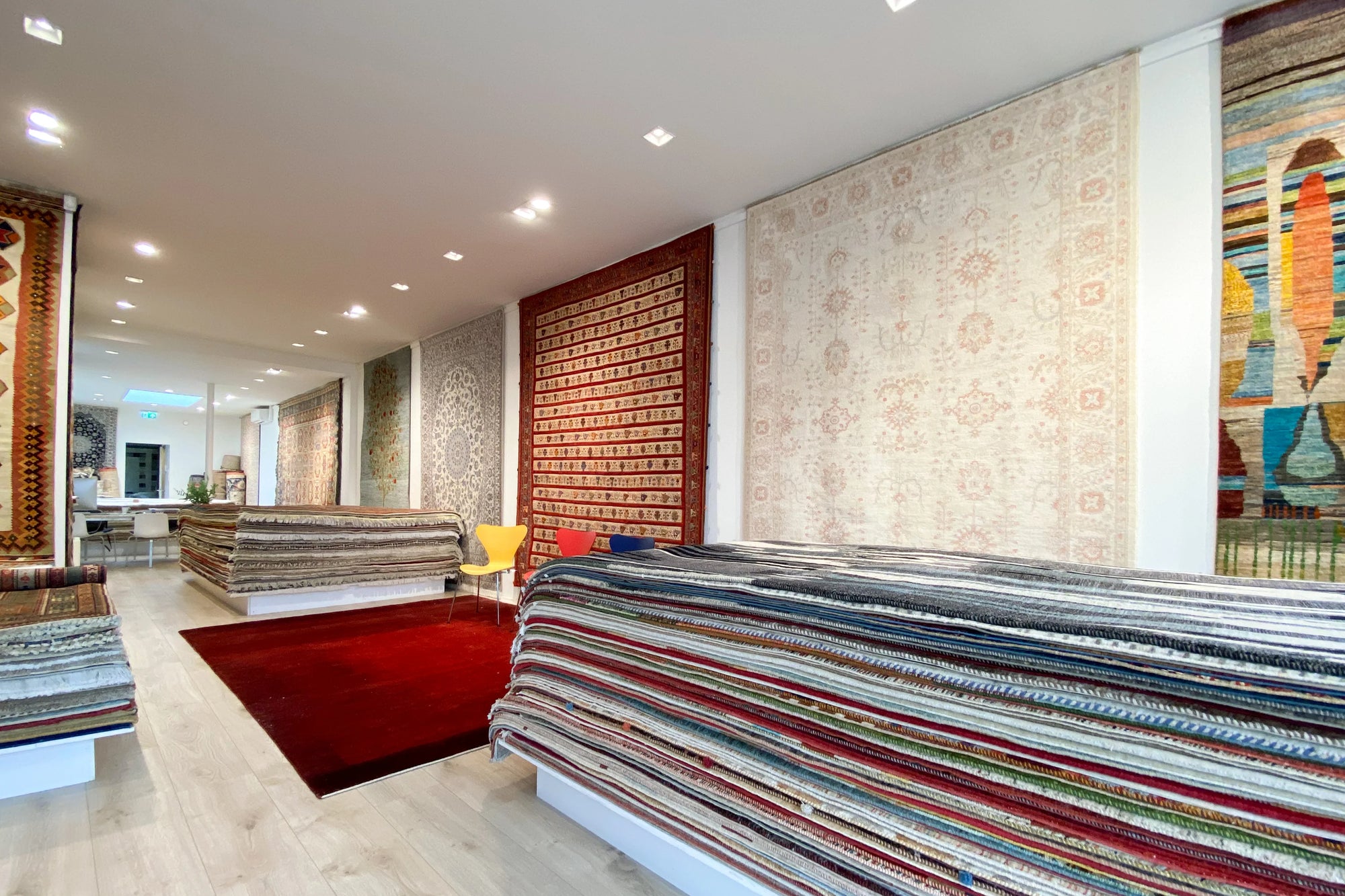
's-Gravelandseweg 29 A
1211 BN Hilversum
Tue - Fri, 11:00 - 18:00
Sat, 10:00 - 17:00
tel. 035-6228345